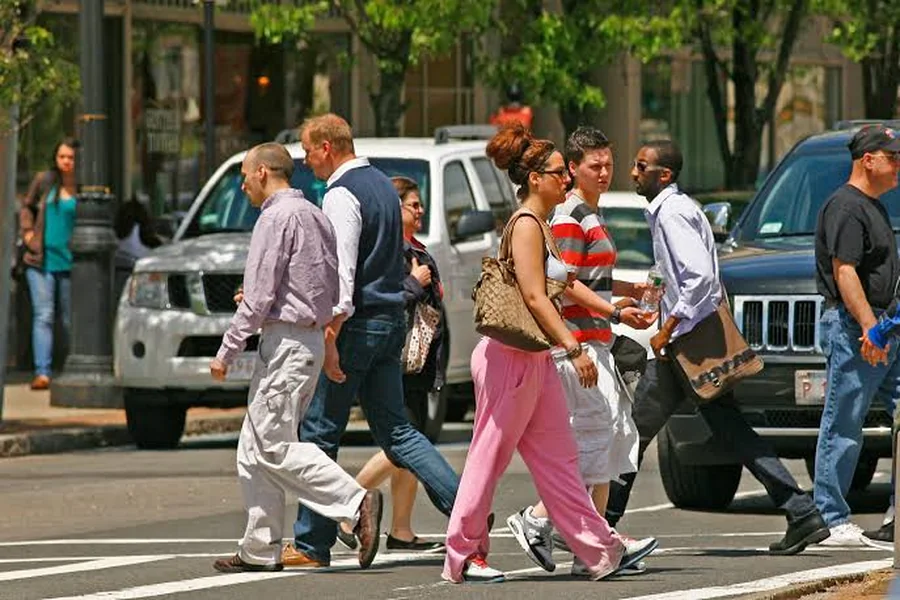
Streetstyle photography is often treated as a fashion category, but spend enough time watching how people actually dress for the sidewalk rather than the runway, and it starts to look more like a form of urban anthropology — a way of reading a city’s rhythm, climate, and culture through what its residents reach for on an ordinary Tuesday.
Function Before Flash
The biggest gap between runway fashion and real streetstyle is function. A jacket that photographs beautifully but doesn’t survive a commute in the rain gets replaced quickly by something less photogenic but more reliable. Watching what actually repeats across a neighbourhood over weeks — not what appears once in a viral post — tells you far more about a city’s real style than any single striking outfit.
The Accessories That Reveal Habits
Small carried items often say more about daily routine than clothing does. A reusable coffee cup clipped to a bag. A specific brand of headphones. A small pouch that turns out to hold everyday essentials — keys, a lighter, a stick of gum tucked in alongside them, carried the same unremarkable way any small daily item might be. Nicotine salts are another example of a small everyday item that can occasionally appear among the personal belongings people carry. None of these details are dramatic on their own, but together they sketch a fuller picture of how someone actually moves through a day than an outfit alone ever could.
Layering as a Regional Language
Every climate develops its own layering logic, and streetstyle observers get good at reading it almost instinctively. A city with unpredictable weather produces distinctive layering habits — light jackets that can be tied around a waist, scarves doubling as blankets on transit. These aren’t fashion statements so much as practical adaptations that happen to develop a visual identity over time.
The Democratization of Style Documentation
What used to require a photographer stationed outside a fashion week venue now happens constantly, informally, through ordinary people photographing ordinary outfits on ordinary streets. This shift has broadened whose style gets documented and celebrated, moving the conversation away from a narrow set of curated “cool” neighbourhoods toward a much wider, more representative picture of how people actually dress.
Why the Unremarkable Outfit Matters Most
The most interesting streetstyle observation isn’t usually the standout outfit — it’s the pattern that repeats across dozens of unremarkable ones. What people wear when they’re not trying to be noticed tells you more about a place’s actual culture than what they wear when they know a camera is watching.
Footwear as the Most Honest Signal
Of all the elements in a streetstyle observation, footwear tends to be the most revealing and the least performed. Outerwear gets chosen with some awareness of how it reads visually; footwear, especially for people covering real distances on foot or transit, gets chosen almost entirely for function. A neighbourhood where sturdy, broken-in sneakers dominate regardless of the rest of an outfit’s formality tells you something concrete about the physical demands of getting around that particular place — cobblestones, long transit walks, unreliable weather — in a way that jackets or accessories rarely communicate as clearly.
The Seasonal Turnover of Street Style
Watching the same stretch of sidewalk across an entire year reveals how gradually and unevenly seasonal wardrobe shifts actually happen, compared to the abrupt seasonal transitions implied by retail calendars. Layers get added and removed individually over weeks rather than all at once, and the specific order in which people give up on certain garments — scarves before heavier coats, usually — tends to be remarkably consistent within a single city, even though it varies considerably between cities with different climates. This kind of granular, unhurried observation is really only available to someone watching the same place repeatedly over time, which is part of why long-term streetstyle documentation tends to reveal patterns that a single viral photo set never could.
A Final Note on Watching Versus Judging
The most useful streetstyle observers tend to describe their work less as evaluating outfits and more as simply paying attention — resisting the urge to rank or judge what they see, and instead treating each outfit as evidence of how a particular person is navigating a particular day. Approached that way, streetstyle stops being a fashion exercise altogether and becomes something closer to quiet, ongoing curiosity about how a city’s residents actually live.