
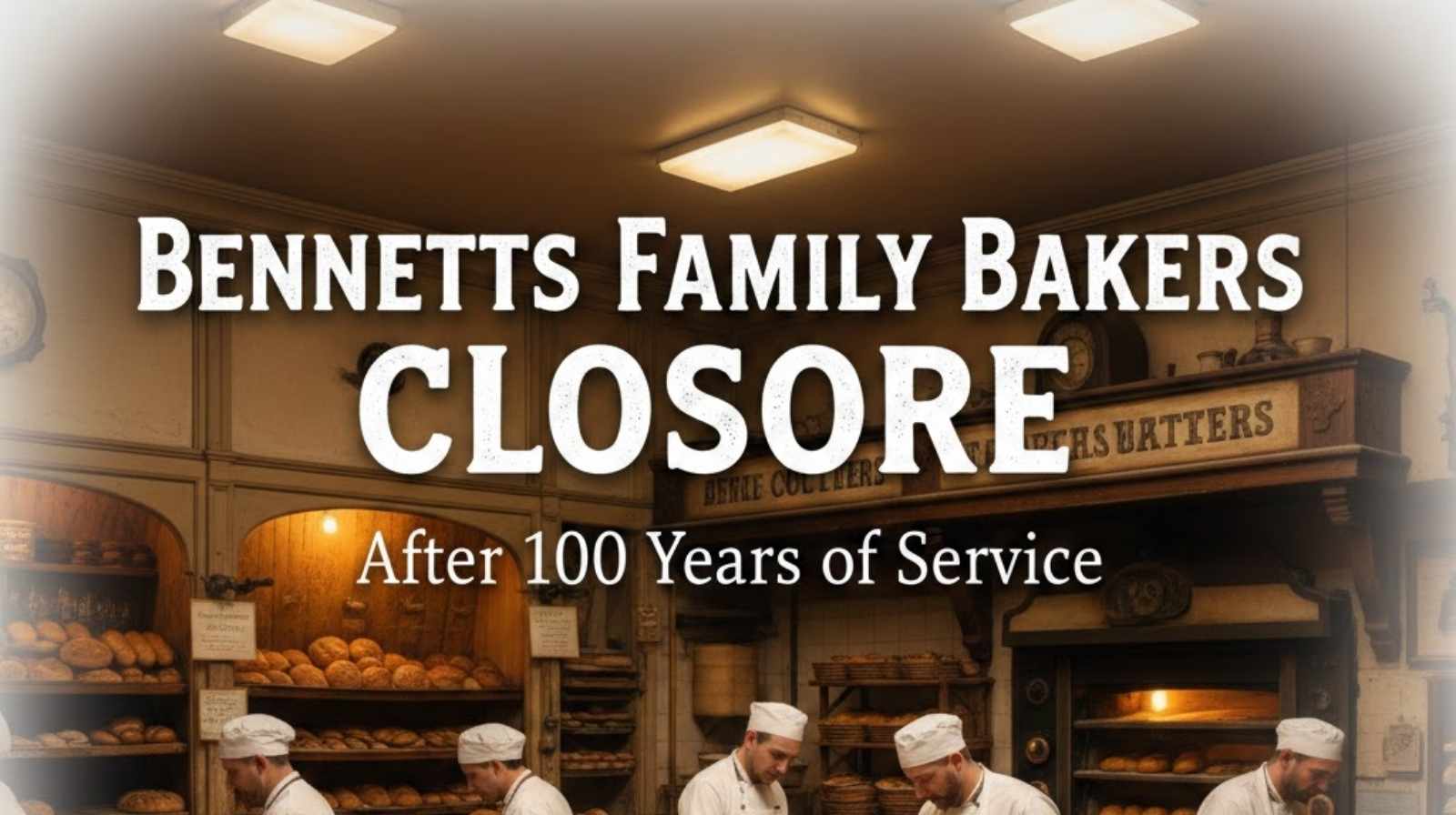

The Bennett’s Family Bakers Closure has become a powerful symbol of the pressure facing independent bakery businesses across the UK. This article explores what led to the business closure of a long-established retail bakery shop, examining operational costs, staffing challenges, shifting consumer behaviour, and the broader economic pressures shaping the UK economy in 2026.
We analyze the timeline, financial sustainability challenges, succession planning issues, supermarket competition, and the impact of inflation and energy costs. Beyond the facts, we also explore the cultural importance of family bakeries within British food culture and local communities, and what lessons other family enterprises can learn from this event.
Bennett’s Family Bakers Closure Overview
Bennett’s Family Bakers was widely known as a traditional independent bakery rooted in handmade quality and classic British food culture. As a multi-generation family bakery, it built strong customer loyalty through fresh bread, pastries, and traditional baked goods prepared using time-tested methods.
However, like many retail bakery shops operating in price-sensitive markets, the business faced rising costs and intensifying market competition. The closure was not a sudden collapse but the result of mounting financial and operational strain.
Independent bakeries typically operate with:
- High fixed costs such as rent and business rates
- Labour-intensive production models
- Early-morning shifts requiring skilled labor
- Thin profit margins due to competitive pricing
For Bennett’s, the combination of rising operating costs and limited financial flexibility made long-term sustainability increasingly difficult.
In 2026, the closure reflects a wider pattern of small business closures, particularly in high street locations experiencing footfall decline. While supermarkets expand baked goods offerings at scale, independent operators often struggle with cash flow management and unpredictable supply chain systems.
Understanding this overview sets the foundation for examining the deeper factors behind the business closure.
Background of Bennett’s Family Bakers
A Multi-Generation Family Enterprise
Bennett’s Family Bakers operated as a traditional family business embedded in local communities. Family enterprises like this often pass knowledge, traditional recipes, and craftsmanship through generations, strengthening neighborhood identity.
Such businesses typically focus on:
- Handmade quality over mass production
- Locally sourced ingredients when possible
- Daily fresh bread production
- Personal customer relationships
These strengths create brand loyalty, but they also limit scalability.
Role in British Food Culture
Independent bakeries are part of British food culture, offering products made with flour, butter, sugar, and other staple ingredients. Unlike supermarket chains, they rely heavily on traditional methods rather than automated production systems.
Bennett’s represented:
- A community gathering point
- A supporter of local employment
- A contributor to local culture
However, small-scale production also means vulnerability to commodity prices. When flour, butter, and sugar prices rise due to inflation or global supply pressures, independent operators feel the impact more acutely than national chains.
The bakery’s structure—family-managed, labour-intensive, and rooted in heritage made it culturally important but financially fragile in a changing retail environment.
Timeline Leading to the Closure
The closure unfolded gradually, not abruptly. Examining the timeline reveals how layered pressures compound over time.
Early Warning Signs
- Rising energy costs impacting ovens and refrigeration
- Increasing ingredient commodity prices
- Growing supermarket competition
- Staffing shortages affecting production schedules
Escalation Phase
As operating costs increased, profit margins tightened. Cash flow management became increasingly complex. Meanwhile, consumer behaviour shifted toward convenience shopping in supermarkets and online grocery platforms.
Final Decision
The combination of:
- Owner retirement considerations
- Health concerns
- Lack of a successor
- Persistent economic pressures
Ultimately led to the decision to close rather than sell.
This gradual progression demonstrates that business closure is often the result of structural challenges rather than a single failure.
Key Reasons Behind the Closure
Owner Retirement and Health Factors
In many multi-generation family bakery businesses, the owner plays a central operational role. Early-morning shifts, physical labour, and daily oversight create physical demands that become harder over time.
Owner retirement is not simply a lifestyle choice; it is often influenced by health concerns. Without succession planning in place, owner-led enterprises face a significant vulnerability.
Lack of a Successor
Succession planning is critical in family enterprises. However, younger generations may pursue careers outside food industry operations.
Challenges include:
- Long working hours
- Relatively modest financial returns
- High stress levels
- Skilled labor demands
A lack of successor often leads directly to business closure, particularly when profitability is already under strain.
Rising Operating Costs
Rising costs represent one of the most decisive factors. Independent bakeries face:
- Increasing energy costs
- Higher business rates
- Insurance premiums
- Wage increases tied to labour shortages
These fixed costs remain constant regardless of daily sales volumes.
Staffing Shortages
Labour shortage issues in the UK continue to affect food industry operations. Skilled labor is essential in bakeries, as traditional methods require technical knowledge.
Staffing challenges include:
- Difficulty recruiting experienced bakers
- Early-morning shift demands
- Wage competition from larger retailers
Without adequate staffing, production efficiency declines, further impacting profit margins.
Impact of Changing Consumer Habits
Consumer behaviour has shifted significantly. Many shoppers now:
- Purchase baked goods during supermarket trips
- Choose convenience over specialty visits
- Compare prices more aggressively
- Expect digital ordering options
This transformation affects footfall decline in traditional high street bakery locations.
Price-sensitive markets amplify pressure. Supermarket competition often offers lower-priced alternatives made through scale-based production.
While independent bakery products may offer superior handmade quality, consumers facing economic pressures often prioritize affordability.
Digital transition limitations further complicate matters. Smaller family enterprises frequently lack e-commerce infrastructure or delivery systems, reducing competitiveness in the digital marketplace.
Economic Pressures on Independent Retailers
Independent bakery operators face layered economic pressures within the UK economy.
The Role of Inflation
Inflation directly impacts:
- Ingredient costs
- Utility bills
- Rent increases
- Wage expectations
The compounding effect reduces profit margins and challenges cash flow management.
Energy and Utility Costs
Bakeries are energy-intensive operations. Ovens run for long periods, refrigeration is constant, and compliance with hygiene standards requires specific environmental controls.
An increase in energy costs significantly raises fixed costs. Unlike supermarkets, independent bakery shops cannot spread these costs across multiple branches.
Location and Footfall Decline
High street decline has reduced daily customer traffic in many towns.
Key drivers include:
- Growth of online retail
- Out-of-town shopping centers
- Changing commuting patterns
Lower footfall decline directly reduces sales volume while fixed costs remain stable.
Financial Sustainability Challenges
To better understand sustainability issues, consider the cost structure of a typical independent bakery:
| Cost Category | Impact Level | Flexibility |
| Rent & Business Rates | High | Low |
| Energy Costs | High | Low |
| Labour | High | Medium |
| Ingredients | Medium-High | Medium |
| Compliance Costs | Medium | Low |
This structure shows why maintaining financial sustainability is difficult. Most expenses are fixed costs or semi-fixed. When daily revenue fluctuates due to market competition or weather patterns, profit margins become unstable.
Cash flow management becomes critical. Any dip in revenue can quickly create operational strain.
Regulatory and Compliance Costs
Food safety and hygiene standards are non-negotiable. Compliance costs include:
- Regular local authority inspections
- Equipment maintenance
- Staff training
- Updated labeling requirements
While essential for public safety, these add operational expenses.
Small family businesses often struggle more with compliance costs than national chains, which have centralized compliance teams.
Cultural Importance of Family Bakeries
Independent bakeries are deeply tied to local communities and local culture.
They represent:
- Traditional recipes passed down through generations
- Neighborhood identity
- Social connection points
- Community structures
The closure often produces strong customer disappointment.
Family bakeries contribute to British food culture by preserving artisanal techniques that industrial baking does not replicate.
When such establishments close, communities lose more than a shop they lose cultural heritage.
Customer Reaction to the Closure
Customer loyalty often becomes visible at closure announcements.
Common reactions include:
- Emotional tributes
- Increased final-week purchases
- Social media messages of support
- Expressions of customer disappointment
This emotional response highlights the deep integration of such businesses within local communities.
However, loyalty does not always translate into sustained revenue sufficient to offset rising costs.
Comparison With Other UK Bakery Closures
Bennett’s Family Bakers is not an isolated case. Across the UK economy, multiple independent bakery operators have shut down in recent years due to:
- Inflation-driven commodity prices
- Labour shortage pressures
- Supermarket competition
- Declining high street traffic
Structural challenges in family businesses amplify vulnerability when succession planning is weak.
Pricing Pressure and Profit Margins
Independent bakeries face extreme pricing pressure.
Raising prices to offset energy costs or higher flour costs risks losing price-sensitive customers. Holding prices steady compresses profit margins.
This tension creates a strategic dilemma:
- Increase prices and risk losing customers
- Maintain prices and reduce profitability
- Cut quality and damage brand identity
For businesses built on handmade quality and traditional methods, the third option is rarely acceptable.
Waste and Production Risks
Unlike packaged goods retailers, bakeries produce perishable items daily.
Production risks include:
- Unsold fresh bread
- Ingredient spoilage
- Fluctuating demand
Waste directly impacts margins. Overproduction reduces profitability, while underproduction frustrates loyal customers.
Balancing supply and demand remains complex without advanced predictive systems.
Long-Term Industry Outlook
The independent bakery sector remains viable but must adapt.
Future strategies may include:
- Greater digital transition adoption
- Click-and-collect models
- Specialty premium positioning
- Community-backed funding models
- Diversified product ranges
Innovation balanced with traditional recipes can help maintain relevance.
However, the structural realities of rising operating costs and market competition mean not all family enterprises will survive.
Lessons From the Closure
Bennett’s Family Bakers Closure offers several actionable insights:
- Prioritize early succession planning
- Invest in digital capabilities
- Diversify revenue streams
- Strengthen cash flow management
- Monitor cost structures continuously
The broader lesson is that cultural importance alone does not guarantee sustainability. Economic pressures must be proactively managed.
Independent bakery owners must view operations strategically, not solely as heritage enterprises.
Final Thoughts
The Bennett’s Family Bakers Closure reflects the intersection of tradition and modern economic realities. It demonstrates how rising costs, labour shortage conditions, succession planning gaps, inflation, and high street decline combine to challenge even beloved family businesses.
As the UK economy evolves, independent bakery operators must innovate while preserving the core elements that make them culturally significant.
The closure marks the end of a chapter for one local institution—but it also serves as a roadmap for how similar businesses can better prepare for the future.

Grayson Pike is a pop culture enthusiast and entertainment writer with a sharp eye for celebrity trends. He explores Hollywood stories, interviews, and behind-the-scenes insights, delivering engaging content with a unique voice. Grayson combines curiosity and expertise to keep readers informed and entertained in the fast-paced world of fame.
