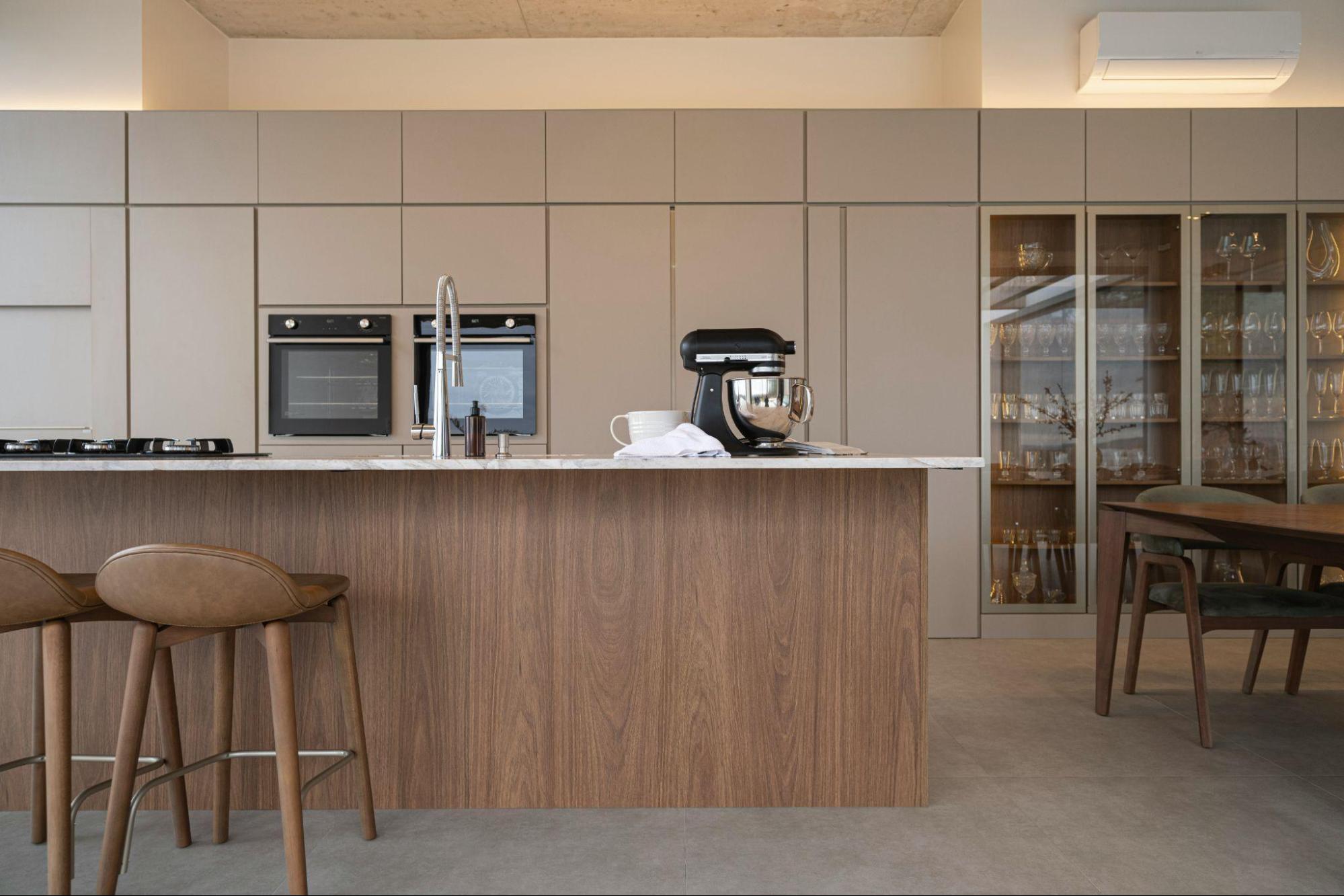
There is a reason warm neutrals are so popular in kitchen design. They offer the calm of a pared-back palette without the sterility that made all-white schemes feel so ubiquitous for so long. Think mushroom, putty, toasted almond, clay, parchment and deep cocoa rather than plain beige. These are shades with an undertone, a point of view and, most importantly, enough softness to make a hardworking room feel genuinely warm and welcoming.
Start With an Undertone
The mistake is treating warm neutral as a single shade. Much more effective approach is choosing a family of shades that create a harmonious combination. A plaster off-white wall might share the room with taupe cabinetry, a walnut island, and limestone-colored flooring.
Before choosing finishes, identify the kitchen’s natural light. North-facing rooms often welcome creamier, more yellow-based whites; sunny spaces can carry complex mushroom, camel and muted olive with ease. The objective is to create a gentle contrast: pale cupboards against a richer island, or warm stone with cabinets one shade deeper.
Let Materials Do the Storytelling
Character is rarely about adding more. It is about choosing surfaces that earn a second look. The graceful irregularity of honed stone, the grain variation in rift-cut oak, the faint ripple of handmade tile and the lived-in gleam of unlacquered brass can give a neutral kitchen the dimensionality a bright color might otherwise provide.
This is especially relevant as natural finishes become more popular. NKBA reports that organic, neutral colors and natural materials are leading kitchen directions, a welcome correction to years of overly smooth, uniformly pale spaces. Rather than specifying a perfect creamy quartz and calling it done, consider a softly veined quartzite, tumbled travertine or a honed marble with warm mineral movement.
Make the Cabinetry Feel Architectural
Cabinetry occupies a significant amount of visual real estate, so its details matter more than its color alone. A soft taupe-painted cabinet can become surprisingly memorable with inset doors, slender rails, an aged-bronze latch or a discreet bead around a glass-fronted upper. Conversely, a more contemporary slab door in a warm oak veneer can bring a disciplined, gallery-like quality to the room.
The point is to use a neutral as a backdrop for proportion and craft. If the cabinetry is uncomplicated, introduce a sculptural range hood. If the millwork is detailed, keep the hardware elegant and limited.
Treat the Backsplash as a Moment of Texture
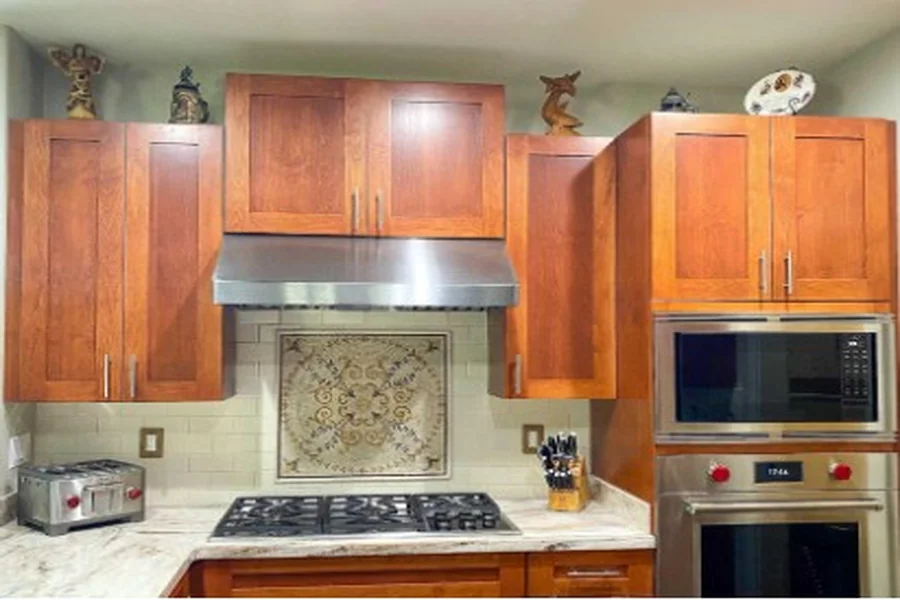
A backsplash is the ideal place to let a limited scheme loosen up. Instead of introducing a stark contrast, choose texture, scale, or a hand-finished edge. A tonal zellige tile, softly glazed brick tile or a low-contrast mosaic backsplash can immediately make the room look more interesting, without the need to introduce more colors.
For a more formal note, marble mosaics in cream, tobacco and pale gray can add a tailored, almost old-world refinement behind a range. What matters is that the pattern has somewhere to breathe. Pair it with simpler counters and avoid competing it with a boldly veined island stone.
Add Contrast Through Metal, Wood and Light
A neutral kitchen benefits from a few notes of definition. Dark bronze, aged brass, and blackened steel give pale cabinetry a graphic outline; walnut, smoked oak or stained ash prevent a sand-and-cream scheme from becoming overly sweet. Even the humble tap can become a compositional detail when its finish relates to cabinet hardware and lighting.
Lighting deserves equal attention. The most convincing warm-neutral rooms shift over the day, becoming brighter and more useful in the morning, then lower and more intimate after dark. Layer recessed lighting with soft under-cabinet illumination and a pendant that feels more like jewelry than equipment. Having a few accents within warm neutral color scheme will add depth to the interior design.
Allow One Element to Be Imperfect
The final ingredient is a touch of the unexpected. It may be a vintage stool tucked beneath the island, an antique oil painting on an otherwise bare wall, a skirted pantry door, or a richly veined stone ledge that refuses to behave like a standard countertop. These details keep a carefully planned room from feeling too perfect.