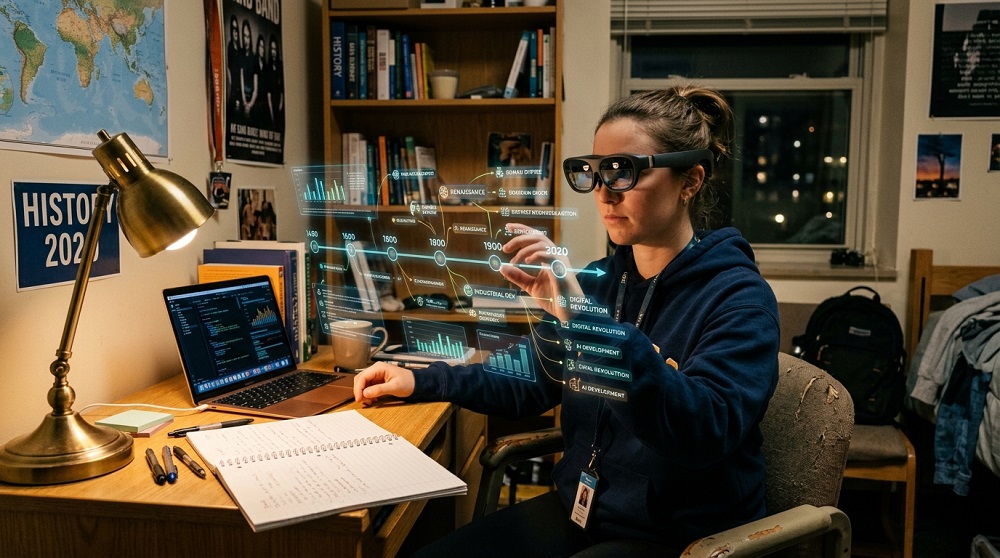
There’s a moment many workers remember clearly — the first time they used an AI tool at work and realized it genuinely saved them time. Not in a gimmicky way. In a real, tangible, this-changed-my-morning kind of way. That moment is now happening across offices, hospitals, classrooms, and studios worldwide. AI isn’t coming to work. It’s already there.
From Novelty to Necessity
The speed of adoption has been striking. In 2023, only 30 percent of employees reported using AI at work. By 2025, that number had jumped to 76 percent. In just two years, AI went from an interesting experiment to a standard part of the working day for the majority of professionals.
And how people are using it is more revealing than how many. According to the Microsoft Work Trend Index, decision-making accounts for 28% of workplace AI activity — suggesting that AI is evolving beyond simple productivity tasks and is increasingly being used to analyze information, evaluate options, and support human judgment. People aren’t just using it to write emails — they’re using it to think better.
The Invisible Assistant in Every Department
In 2026, AI has become an invisible assistant embedded in everyday office tools and workflows — from managing emails to analyzing business data, helping employees work smarter, faster, and more efficiently.
Meeting summaries are generated automatically. Inboxes are prioritized intelligently. Complex data sets are translated into simple insights that non-technical employees can actually use. Tasks that once consumed hours now take minutes — not because the work disappeared, but because AI absorbed the repetitive parts, leaving humans to focus on what genuinely requires human thinking.
Jobs Aren’t Disappearing — They’re Changing
The biggest fear around AI at work has always been replacement. The reality is more nuanced. Over the next two to three years, 50 to 55 percent of jobs in the US will be reshaped by AI — meaning most workers will retain the same or a similar role but face radically new expectations for how they work and what they produce.
Reshaped, not erased. The distinction matters enormously.
AI Skills Are Becoming Career Currency
Candidates with AI-related skills command an advertised salary 23% higher than otherwise comparable candidates without those skills — and AI skills are also helping offset conventional disadvantages in hiring, with older applicants and candidates without advanced degrees seeing their prospects improve substantially when AI skills appear on their résumés.
Learning to work alongside AI is quickly becoming as fundamental as knowing how to use a spreadsheet.
The Human Element Remains
None of this means human qualities matter less. Creativity, empathy, ethical judgment, and genuine leadership are precisely what AI cannot replicate. The most successful professionals in 2026 aren’t those who resist AI or those who blindly defer to it — they’re the ones who know when to use it and when to trust themselves instead.
AI handles the routine. Humans handle the rest. That division of labor, done well, is a powerful thing.